Experience of granting rights. Serfdom abolished on 19 February 1861
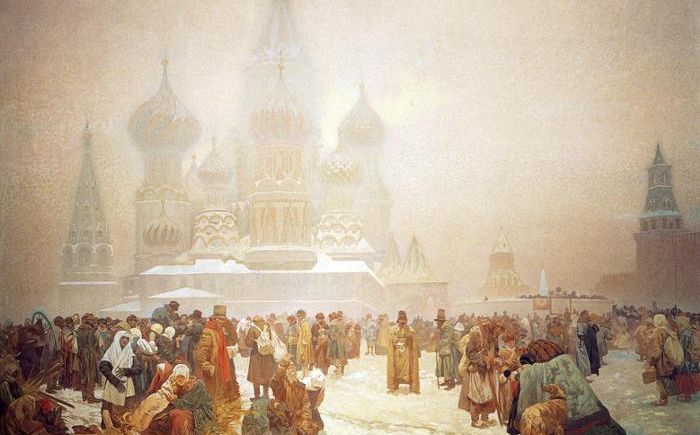
On 19 February 1861 Emperor Alexander II signed the manifesto “On the graceful granting of serfs with the rights of free villagers”. The great reforms reached the stage of practical implementation. 150th anniversary of the liberating act is a good occasion for the present-day Russian society to remember the lessons of the epoch of great reforms, a unique epoch in the history of Russia due to its profound, but peaceful modernization. All the more so that this reform was not duly understood and assessed even in the 20th century, though it is in its context that that the events of the national history become clearer, as well as the prospects and limitations of the modern reforms.
Written by Nikita Sokolov
Modernization in Russia
It is especially worth reminding of it now, since “modernization” has again become a topical political slogan. Examples of breaking through are sought and found in violent industrializations of Peter the Great and Stalin, who achieved short-term solutions to vital technical problems but brought the society to an even more archaic level than before the beginning of industrialization. Moreover, these “mobilizations” blocked the establishment of institutions providing a permanent peaceful adaptation to changing life conditions for a long time. Reforms of Alexander II, rendering the social system more complicated, increasing the number of actors of social and historical creation, have been deleted from the relevant memory, and are still quite often stigmatized as extortionate in accordance with the Soviet tradition, despite the data received by historians during the last three decades. And only convulsive reforms carried out by the “vertical of power” with a view to strengthen the position of this power are regarded as a specific national and the only accessible way of reforming in the country.
The Great reforms: prologue
The supreme power realized the necessity of radical reforms under the impression from an obvious collapse of the regime of Nikolay I endeavoring to secure a high stability of the system, having waved aside the society from any influence on state affairs and ruling exclusively via the bureaucratic vertical of power. A shameful defeat in Sevastopol – a failure in the military sphere where the power considered itself most competent targeting all the strengths of the population to its needs – made people, including well-meaning autocracy defenders believing in “the truth of the monarch's will”, open their eyes to a real state of affairs.
An important prerequisite of the Great reforms was liberally thinking intelligentsia. This thin layer of “liberal bureaucracy” latently and quietly, during the toughest years of Nikolay's rule, elaborated a common vision of the objectives of the up-coming changes and ways of their realization together with liberal-minded scientists, writers, pedagogues.
Efficient reforms were combined with a decisive denial of national arrogance, false pride of uniqueness and the myths of “a specific way”. The experience of more developed and prosperous countries of the Old and the New World was thoroughly analyzed and applied to national realities. Academic scientists and practising experts from the Western Europe were involved in assessing and elaborating draft bills.
It is appropriate to remember that effective reforms were only possible thanks to publicity and transparency. Not once reforms were initiated in the preceding rule under the cover of a bureaucratic secret. But only public declaration of reformist policy and granting of a certain freedom to society in the discussion of the plan of changes made reforms possible and irreversible.
Organization of changes
To elaborate the final draft of the peasants' reform “drafting commissions” were set up — special bodies with experts as members, who were outside the bureaucratic hierarchy, an institution characterised by geographer Pyotr Semyonov-Tyan-Shansky working in one of these commissions as “unprecedented up to now” in Russia, independent and self-sustained.
It is worth remembering that the main change — “abolition forever” of serfdom of half of Russian peasants was but proclaimed and put in legal framework by the supreme power. However, landowners and peasants themselves were entrusted with working out the mechanism of the liberation and elaboration of specific conditions. The great state cause was put through in the form of numerous private agreements of peasants with their former owners. The power, admitting its inability to take into account all the diversity of local conditions, gave up meticulous regulation and declared that only
«most difficulties inevitable in some cases of application of general rules to diverse circumstances of separate estates will be resolved by way of mutual voluntary agreements, and this way will facilitate the passage from the old order to the new one and will assert mutual trust for the future».
The manifesto directly announced that the sovereign was relying “on the common sense of our people”. Banal bureaucratic argument about unenlightened people not being ready to freedom, which served as a main reason of obscurants for one and a half century, was cast away bringing a great use to the country. The power no longer regarded itself as the only and impeccable subject of history, stopped imagining itself “the only European” and appealed to all the social classes to cooperate in the cause of the renovation of the country.
Modernization as a complex measure
Modernization is a wide variety of measures, it is difficult to distinguish a “key chain” in it, on which all the other spheres of people's life are dependent. Reforms were carried out in a complex way, prepared simultaneously and realized as soon as the corresponding legislation was ready. In accordance with the accurate wording of Vasily Kluchevsky:
“Peasants' reform was a point of departure and at the same time a final goal of the whole transformation cause. It was supposed to be the start of the process, and all the other reforms resulting from it as inevitable consequences were to guarantee the success of its implementation and found support and justification in its realization”.
It is only upon these conditions that significant results were achieved.
Costs, consequences and prospects
Profound social transformation was almost bloodless and was realized with minimal social costs. Scrupulous Russian society of those days considered these costs unreasonably high, but after a lapse of time to do justice it should be said that almost simultaneous similar transformations in the USA and Japan were accompanied by or caused bloody civil wars leading to ruin, disappearance from historical stage and even physical destruction of certain social groups.
Peasants' reform provided freedom of independent economic action of peasants, despite the stereotype strenuously introduced during the Soviet times and quite wide-spread until now. The process of unprecedented scale of transition of peasant communities from the traditional three-field farming to intensive many-field one oriented towards production of new tradeable agricultural goods started in the country. At that development of non-agricultural works led to an outburst of working migration of peasantry.
Setting up of territorial and municipal bodies of local government (Zemstvo) was one of the most important steps towards the liberalization of the political system. These “economic” establishments not only promoted cooperation of members of various social classes in the cause of improvement, skills of conflict resolution through parliamentary methods and methods of effective search of civil consensus were elaborated inside these bodies.
New spheres and forms of activity could not exist and develop without “a quick, fair and gracious court”. The judicial reform of 1864 establishing a present-day competitive procedure in Russia instead of the old inquisitorial trial not only provided these conditions of economic development, but became one of the instruments of working out the present-day nation of citizens, of strengthening the idea of the rule of law. Not only a significant independence of the new court from the executive power, but also appearance of the institute of private advocacy, as well as separation of investigation from the police contributed to this process.
Thus, in fact, to a limited degree a separation of powers started in Russia. Governors and police officers retained in accordance with the law quite a significant influence on the court, however, courts established their independence very successfully thanks to the transparency of legal proceedings. Publication of court reports and even of shorthand records of trials which stirred public attention in periodicals significantly restricted the sphere of undercover bureaucratic manipulations with justice.
The system of punishment was modified with a view to foster a greater respect for human dignity in Russian nationals. In 1863 it was forbidden to military and civil courts to sentence to corporal punishment. Rods were preserved up to 1904 only for convicts, prisoners and soldiers and mariners offenders, as well as for peasants sentenced by rural district courts.
The introduction of general compulsory military service in 1874 concluding the formation of the new, in essence, army which showed a high combativity during the Russian-Turkish war of 1877-78 also contributed to the approximation of social classes.
The transformations could not be successful without the modernization of the state financial system. Up to 1862 there was no unified budget in Russia; a lot of income was received and expenses made by different departments separately without the knowledge of the ministry of finance. With the introduction of the regular budget – state unified register – finances were sorted out, and departmental appetites adapted to the priority aims and possibilities of tax payers for the first time.
The abolition of preliminary censorship and setting up of the court procedure for prosecuting crimes in the sphere of the press promoted the development of influential and responsible press — a faithful mirror and watchdog of public interests.
Reforms of national education, with the state giving up its monopoly on education as one of the most important ones, led to the appearance of private and public (zemskaya) schools and establishment of autonomy of universities, provided, and thus provided a consequent unprecedented boost in national science. But moreover, they lay the foundation of the system of development of national identity on secular and rational basis, promoted the development of the feeling of dignity in nationals undermined in all the classes by a one and a half century serfdom dissipation. One of the outstanding figures of the reforms, head of drafting commissions Yakov Rostovtsev supposed, not without reason, that it was thanks to the reforms of Alexander II that “the creation of the Russian nation” started.
The shaping of a full-fledged civil nation was not, however, a great success due to some blunders and erroneous presumptions of the reformers, quite obvious now. But this negative experience of the great reforms is of a great value and should be distinctly articulated and reflected upon.
Setting a seemingly good aim – to avoid mass proletarization of liberated peasants – and at the same time being aware of the fact that economic conditions of the liberation were quite difficult and that landowners would try to press the peasants in all possible ways, reformers proclaimed community property of the peasants' land allotments. Preservation of community with its archaic rules of land redistribution, with frankpledge practices in the payment and serving of duties impeded free development of independent peasant farming. The reformers did not mean to preserve the community forever, opportunities of withdrawal from it under certain circumstances were provided for and and were to be widened with time. Thus, according to the statement of one of the authors of the reform, this issue was “left for the time and the people itself to settle”. However, when the wind in the power structures changed, during the epoch of the “light freezing” of Russia Alexander III resorted to, the process was artificially slowed down and made more complicated. Artificial conservation of the community – the product of serfdom – was not only conducive to the stagnation of agricultural technology in the peasant farming, but also undermined the notion of property in the consciousness of the nation. And the weakness of proprietors' position in its turn contributed to the strengthening of bureaucracy.
The failure of the authors of new court statutes, seemingly minor and insignificant then, was also conducive to it. They failed to establish the principle of the responsibility of officials at court. It was possible to bring officials to justice for their unlawful actions only with the permission of their bosses.
But the main thing was that in fear of strengthening the “planter party” by providing them with the rostrum of “All-Russia zemstvo”, the reformers staked on the good unlimited will of the liberal monarch, having given up the introduction of institutions of parliamentary type, necessary for the correct functioning of the state organism of an open society. At that they did not doubt that “the supreme power itself afterward grew aware of the necessity of appealing to help elected representatives of local interests in the conditions of its developing legislative activity and shared its legislative functions with them”.
The tactical measure providing the reformers with the advantage at the beginning of the reforms turned out a no-win in a long-term prospective. Alexander II, who was at that time going through a severe family crisis as well, was lacking firmness to counteract conservative forces in his own closest environment. These forces successfully used the Polish rebellion of 1863 as an argument to prove the banefulness of the liberalization for the great empire.
Way to catastrophe
The evident slowdown and even a regress in reforms which started soon after and gained strength after the first attempt on the sovereign's life in April 1966 and manifested itself in the limitation of the rights earlier granted to Zemstvo, led to the loss of trust to the supreme power on the part of legal liberal society, which made sure the success of marginal terrorist groups. A tardy attempt to restore “trust relationship” between the society and the authority by way of setting up a State council of consultative commissions with elected representatives of Zemstvo and municipal self-governance called, in accordance with a tradition, Loris-Melikov's “constitution” was never implemented.
The regicide on 1 March 1881 serves as an extremely convincing proof of the danger for the government of cutting off social forces staying the only actor on the political stage.
The policy of autocracy stability proclaimed in the Manifesto of 29 April 1881 upheld by the decree of 14 August 1881 on “strengthened guard” meant the coming of reaction, that is, the power lost initiative in implementing large-scale reforms and could only react defensively to the challenges of a rapidly changing times. As we now know for sure, it was a way to catastrophe.