Historical Policy in May 2011: Analytical Review
The May 2011 report based on the news covered by Monitoring of Historical Policy is the second analytical review of the project after its pilot April issue
The monitoring identified 81 news items in May 2011. May 1 and May 9 – Labor Day and Victory Day – were the central “memorable dates” in May in the soviet time. It is now difficult to place these two dates side by side in the present-day Russia. May 1 has lost its erstwhile significance after the collapse of the USSR. It became a de facto “left-wing” political holiday which is interesting mostly for the CPRF and its supporters. On the other hand, the celebration of May 9 over the past decade has almost exceeded the level of enthusiasm in the “late soviet era.”
-
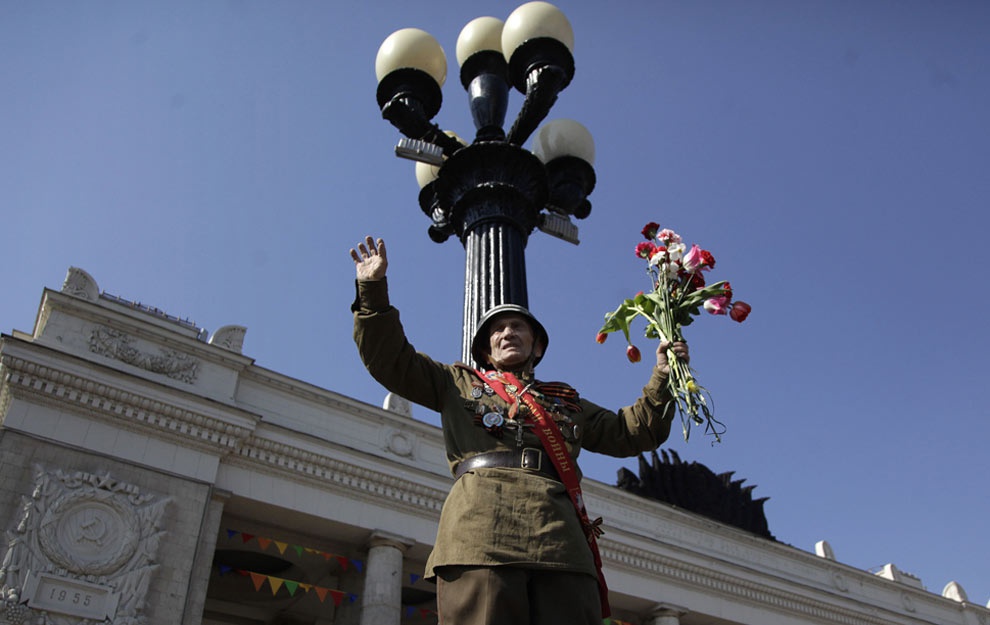
Topic A of the month is certainly the celebration of May 9, the related in-memoriam events, work with the war veterans, statements and initiatives of politicians and individuals (they touched on foreign policy as well, e.g. when they stated Russia’s position with respect to public disorders in West Ukraine on that day
http://www.urokiistorii.ru/1610 ), and the public response to the holiday (it was particularly acute in a material based on a digest of what the young people wrote in social networkshttp://www.urokiistorii.ru/1605 ). - Other most important dates are May 1 (“Day of Spring and Labor”) and May 10 (Day of Memory and Grief in Chechnya).
-
The “event of the month” was Prime Minister Vladimir Putin’a announcement about the formation of People’s Front. The very name of this organization “produces historical vibrations” (the further development was the formation of an alternative “People’s Militia” by CPRF). Both events were important election initiatives of the two largest parties represented in the Duma
See http://urokiistorii.ru/2206 for more details. .
News about Yuri Gagarin (http://urokiistorii.ru/1611), the continued polemics about “de-Stalinization project,” pro-Stalinist initiatives (http://urokiistorii.ru/1621), statements made by radical communists (CPLO) and some war veterans (http://urokiistorii.ru/1839), as well as new reports about preparations for celebrating the bicentenary of the war with Napoleon (http://urokiistorii.ru/1623) – all these news in May were echoing on April events.
The sources of news were websites of political parties, newswires on web portals and online versions of the media (newspapers, radio and TV channels) including the regional websites of nongovernmental organizations
Topic A: May 9, or Victory Day
The celebration of Victory Day over the past 16 years
Governors reported from various regions about preparations for the celebration of Victory Day. The overall plans of regional-level events scarcely differed from each other: they included ceremonial concerts and meetings at schools, “memory watches” (http://urokiistorii.ru/1620), the opening of new museums and projects of would-be museums (http://urokiistorii.ru/1913), (http://urokiistorii.ru/1593), cleaning of downtown streets and squares (where monuments to the Great Patriotic War heroes are often located), etc. In one or other form, all these events are held every year, and they all make the war veterans “re-live” Victory again and yet again
The ritual erection of new monuments on the occasion of the “memorable date” is not devoid of some absurdity: the thing is that a great many monuments to the war commanders and heroes have been put up during the sixty-six years since 1945. For example, another monument to Marshal Vasily Chuikov was erected in Moscow in May 2011 (the first such monument was uncovered five years earlier in a place outside Moscow where he was born). The sculptor of the new statue must have taken the location into account (the monument is placed next to a high school) because the war commander has a girl seated on his knee and hands a book over to her
Finally, another traditional compulsory “state duty” is care about the war veterans. News in April reported about one-off payments and benefits to the war veterans (http://urokiistorii.ru/2467). But there were “abnormal situations” in May; the media’s attention to such situations was sometimes used by the authorities to demonstrate self-criticism to the public: the authorities spoke about unresolved problems that they should address in the immediate future. For example, there were reports about a war veteran in Moscow who received an apartment but was deprived of his retirement benefit (http://urokiistorii.ru/1744). The story of soldier Anton Karavanets came to light and was broadly covered by the media: he refused to have a public welfare apartment in St. Petersburg and wrote to President Obama asking for the U.S. citizenship (http://urokiistorii.ru/1615). Russian President and Prime Minister made several statements in which they promised that the war veterans would have [free] apartments “whatever it takes” (http://urokiistorii.ru/1608), http://urokiistorii.ru/1626 and lashed on the poorly performing local officials (http://urokiistorii.ru/1742).
Young people’s posts about the Victory and war veterans were top viewed posts in social network blogs for more than a week (information from portal besttoday.ru) (http://urokiistorii.ru/1605). Teenagers wrote, either earnestly or as a jeer, that they should mob war veterans in the streets, or throw up their hand in the Nazi greeting, or get drunk together “for our common victory,” etc.
This response from a part of the public to the established ritual of May 9 celebrations shows that not all citizens are ready to accept the bravura victory rhetoric which comes from the authorities. The image of a war veteran increasingly becomes part of the formal protocol; as Boris Dubin put it, this ceremonial figurehead “seemingly represents the State in a family, it is put over the family memory and reshapes it into an overall state-run plan”
Other events whose initiators proceeded from the understanding that a “veteran” does not necessarily means “veteran of the Great Patriotic War” were held in Moscow, Kuzbass, Perm and other cities. As part of a social action, young people washed windows in the apartments of veterans (WWII soldiers, labor veterans, victims of soviet repressions), and listened and recorded their stories about the past (http://urokiistorii.ru/1846).
Memorable dates of the month: May 1 is the Spring and Labor Day (former “International Workers’ Day”); May 10 is the Day of Memory and Grief in Chechen Republic
It becomes increasingly more obvious that the celebration of May 1 has been losing its historical and political importance. Paradoxically, though, this holiday regains its initial form of left-wing protest. The May 1 holiday was established by the Second Communist International to commemorate Chicago workers who were killed when a public meeting was dispersed. The State (which was “communist” – at least by slogans) naturally monopolized this holiday in the Soviet Union.
The revolutionary glare of May 1 does not in any way fit in with the historical policy pursued by the authorities in the present-day Russia, despite the obvious revival of many soviet ideological constructs. The United Russia rallies are held in support of the soviet tradition of the nationwide holiday. But they have been stripped of any ideological and problem-specific overtones because May is the holiday of “spring” in the first place, and “labor’ comes second. Our monitoring includes news about “May Day celebrations” by CRPF across Russia, with their inevitable red flags and balloons, equally inevitable portraits of Lenin and Stalin, and slogans such as “Bring back soviet education, the best education in the world!” (Kaluga) (http://urokiistorii.ru/1622).
***
Unlike May 1, the Day of Memory and Grief in Chechnya on May 10 is a new memorable date. According to President of Chechnya Ramzan Kadyrov, “it is an occasion for us to commemorate all victims of tragedies, regardless of what their position was.” The deportation of Chechens in 1944, two wars in Chechnya (in the 1990s and early 2000s, and murder and burial of Akhmad Kadyrov (president of the republic before Ramzan Kadyrov) on May 9-10, 2004 are particularly important in this string of tragic events. The Caucasian Knot web resource gave detailed coverage of events on May 10, 2011. It pointed out that this memorable date, as well as the refusal to celebrate February 23 (the Red Army Day in the Soviet Union) which is related to the beginning of Stalinist deportations in 1944, is viewed as an insult by many people who are displeased with the policy of Kadyrov Jr. They perceive it as further evidence that the “cult of the Kadyrov family” is being built in Chechnya. The latter is confirmed by the current president of the republic who announced on May 10 that his father’s course “is sacred” for Chechnya. (http://urokiistorii.ru/1586)
Event of the month: Putin announced the formation of the People’s Front
Prime Minister Putin spoke about the formation of the People’s Front for the first time on May 6 in Volgograd. Practical consequences of this event are uncertain even now, almost six months later. The Front’s pre-election function is to consolidate the best public forces around Putin (instead of the United Russia which has discredited itself), and this function correlates well with the historical meaning of the Front’s name. Putin himself said this in his program speech, “There were doubts because a front does divide something in two, etc. If we speak about what was in history, the front united.” Thus, the People’s Front appeals to the memory about the Great Patriotic War in the first place, and PM revisited this historical topic several times in his Volgograd presentation. For example, when asked whether Volgograd could bid for the 2018 Football World Cup, he said, “What victories could be without Stalingrad!” (http://urokiistorii.ru/1619).
Meanwhile, the meaning of “front” is reminiscent of the numerous soviet prewar symbols, such as “labor front,” “agricultural front,” “invisible front,” etc. All these clichés used to be examples of the State-inspired politization of the public and private life which ousted everything that was personal and non-political into the periphery
It is not by chance that many media responded to Putin’s initiative with various puns that emphasize the difficult history of the name. Polit.ru, for example, carried its review under the heading “Colonel Putin Came to the Front” (http://www.polit.ru/article/2011/05/07/al070511/). This was an allusion to a song by Aquarium group, with a line “according to the latest intelligence information, we warred against ourselves.”
The Communist Party responded to Putin’s initiative by establishing its own People’s Militia (the name refers to the Time of Troubles in Russia in the 17th century and Minin and Pozharsky). Thus, CPRF made another furrow on the field of the Russian historical politics.
News in May: Special Cases
“We have taken the best things away from the Germans?” A poll in Omsk
Omsk veterans of the Great Patriotic War complained to the local anti-monopoly authority about “improper” advertisement of PVC windows.
“The jubilee edition of “The Protocols of the Learned Elders of Zion” will travel around the world”
“The Protocols of the Learned Elders of Zion” were included in the packages of spiritual writings that will be distributed to the Russian diplomatic missions worldwide.
“To strangle with poetry in a corner”
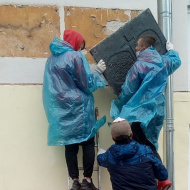
Joseph Brodsky’s poems were recited on May 24 next to a house where a memorial plaque to Grigory Romanov, former secretary of Leningrad oblast committee of the Communist Party, was installed.
“Celebrations in Mordovia: an anniversary of impeccable Service for the Execution of Sentences (1931-2011)”
Celebration ceremonies were held on May 27 in Yavas village (Mordovia) to mark the 80th anniversary of the Service for the Execution of Sentences in Mordovia. Local media carry reports from this “cheerful holiday” and recall the “glorious” history of the institution which has “brought up several generations of the penitentiary system employees.”
“Cossacks include “The Don Studies” in the school curriculum, but the textbook is yet to be written”
A new course on “The Don Studies” for the Don Region school students is to be completed in the coming weeks. The new school subject was initiated by the Cossacks, and the local Governor supported the idea. The content of this course is not published yet but it will focus on patriotic issues.
By Sergei Bondarenko
Thematic Index of News Items in May
May 9, Great Patriotic War veterans, commemoration: http://urokiistorii.ru/1620, http://urokiistorii.ru/1612, http://urokiistorii.ru/1615, http://urokiistorii.ru/1616, http://urokiistorii.ru/1617, http://urokiistorii.ru/1607, http://urokiistorii.ru/1608, http://urokiistorii.ru/1610, http://urokiistorii.ru/1605, http://urokiistorii.ru/1596, http://urokiistorii.ru/1597, http://urokiistorii.ru/1593, http://urokiistorii.ru/1594, http://urokiistorii.ru/1595, http://urokiistorii.ru/1592, http://urokiistorii.ru/1626, http://urokiistorii.ru/1713, http://urokiistorii.ru/1725, http://urokiistorii.ru/1730, http://urokiistorii.ru/1739, http://urokiistorii.ru/1744, http://urokiistorii.ru/1742, http://urokiistorii.ru/1750, http://urokiistorii.ru/1840, http://urokiistorii.ru/1846, http://urokiistorii.ru/1969, http://urokiistorii.ru/1913, http://urokiistorii.ru/1912, http://urokiistorii.ru/1911.
May 1: http://urokiistorii.ru/1622
Andrei Sakharov: http://urokiistorii.ru/1606, http://urokiistorii.ru/1603
Architecture and protection of historical monuments: http://urokiistorii.ru/1601
Joseph Brodsky: http://urokiistorii.ru/1728, http://urokiistorii.ru/1741, http://urokiistorii.ru/1841
“Great Russians” in the service of the United Russia Party: http://urokiistorii.ru/1741, http://urokiistorii.ru/1746
WWII: http://urokiistorii.ru/1614, http://urokiistorii.ru/1602
Gagarin http://urokiistorii.ru/1611
Grigory Romanov, memorial plaque: http://urokiistorii.ru/1625, http://urokiistorii.ru/1841
The Dyukov-Belykh case: http://urokiistorii.ru/1778
“De-Stalinization”: http://urokiistorii.ru/1714
Dmitry Likhachev: http://urokiistorii.ru/1751, http://urokiistorii.ru/1741, http://urokiistorii.ru/1746
Ancient Rus: http://urokiistorii.ru/1599, http://urokiistorii.ru/1598, http://urokiistorii.ru/1724, http://urokiistorii.ru/1845, http://urokiistorii.ru/1844
Yeltsin: http://urokiistorii.ru/1731
History of the USSR: http://urokiistorii.ru/1613, http://urokiistorii.ru/1600
History of Russia in the 17th-19th centuries: http://urokiistorii.ru/1723, http://urokiistorii.ru/1848
History of repressions in the USSR: http://urokiistorii.ru/1722, http://urokiistorii.ru/1842
Lenin: http://urokiistorii.ru/1747
Nazism: http://urokiistorii.ru/1727, http://urokiistorii.ru/1842
People’s Front: http://urokiistorii.ru/1619
New museums: http://urokiistorii.ru/1627
New memorable dates: http://urokiistorii.ru/1586
Society Memorial: http://urokiistorii.ru/1609
The Protocols of the Learned Elders of Zion”: http://urokiistorii.ru/1604, http://urokiistorii.ru/1773
Regional history: http://urokiistorii.ru/1587, http://urokiistorii.ru/1591, http://urokiistorii.ru/1733, http://urokiistorii.ru/1732, http://urokiistorii.ru/1738, http://urokiistorii.ru/1843, http://urokiistorii.ru/1971
Russia and Latvia: http://urokiistorii.ru/1624
Stalin http://urokiistorii.ru/1621, http://urokiistorii.ru/1618, http://urokiistorii.ru/1839
Alexander Suvorov: http://urokiistorii.ru/1726, http://urokiistorii.ru/1736
Festival “History Street”: http://urokiistorii.ru/1847
School: http://urokiistorii.ru/1970
Anniversary of the 1812 war: http://urokiistorii.ru/1623
Translated by Marina Burkova