The ‘Philippov Textbook’: The Story Continues
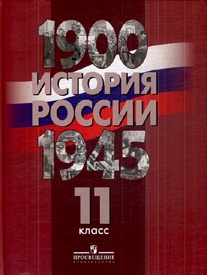
Irina Karatsuba, historian, has perused the recent teacher’s manual and the textbook for 11th-grade students ‘History of Russia. 1900–1945’, ed. Alexander Philippov, by Prosveshcheniye Publishers. She believes that the authors have heeded Ivan the Terrible’s order to his oprichnik judges: ‘Let your judgement be righteous, yet our folk shan’t be found guilty’.
The books’ publishing history and the authors
Several months ago the second volume of the notorious ‘Philippov textbook’ was published. First, Philippov co-authored teacher’s manual on Russian history between 1946 and 2006, which later evolved into a textbook. A scandal flared up, the books were subject to ongoing dispute for nearly two years, yet they were introduced to schools anyway. Several pan-Russian conferences with school teachers were held in the Siberian, Central and Northern Federal Districts, where both the minister for education Andrey Fursenko and the authors of the books, Alexander Philippov and Leonid Polyakov (the author of a similar manual on social studies), recommended using the textbook. So, many schools are now undergoing an experiment by ‘breaking in’ the textbook.
At the beginning of this year, Prosveshcheniye Publishers web-site published an overview of the second volume of the textbook, or actually the first chronologically, since it was dedicated to the 1900–1945 period. The public reacted to the document as well in a very adequate, critical, negative way, but the authors claimed that it was just a conception and that it was necessary to wait until the textbook itself would actually come out. The discussions ceased. Publishing a conception of a textbook is a unique experience, in a way. I think they wanted to soften the public opinion up a bit, so that people would put up with the fact that the textbook would be published anyway, despite all criticism. The actual publication of the textbook, whose conception had received so much criticism, went unnoticed after the two sad anniversaries of August and September 2009: the Molotov–Ribbentrop Pact and the beginning of World War II. However, such events shouldn’t go unnoticed.
Philippov was listed not as the author of the new books, a textbook and teacher’s manual for the corresponding period, but just as the editor-in-chief. Certain chapters were written not by spin doctors, such as Philippov himself, not by Gleb Pavlovsky’s apprentices and his Foundation for Effective Politics’ graduates, but by serious professional historians. One was Alexander Danilov (head of a department at the Moscow State Pedagogical University), others included Mikhail Gorinov, Alexander Barsenkov, Andrey Shadrin (the last two are professors at the Department of the Soviet Period in the Moscow State University), etc. The writing teams of the textbook and teacher’s manual are 2/3 the same. This means a new level of dispute and discussion. Professional political manipulators aim to brain-wash, while historians should be in quest for the truth. Therefore one must argue with them using the language and ways of the truth.
National History: narration features
The textbook leaves a sad impression. To be honest, it’s a straightforward and cynical rehabilitation of Stalin and stalinism. They have done their best to whitewash Stalin.
A) Why terror was useful
This rehabilitation is shown at its best when talking about political repressions. The textbook claims that there was no other way at the time, and the mass repressions and terror were a rational and pragmatic tool in politics (aimed at maintaining the just-achieved ‘stability’) and economy (necessary for the industrialisation and modernisation of the country). The textbook doesn’t contain the notorious description of Stalin as an ‘efficient manager’ (as we know, it was made up by a schoolgirl who had read the previous part of the textbook, following school curriculum), but it does represent the phrase fully. At the same time the authors clearly took into account part of the critical comments to the materials published online, which appeared on the web-site throughout January, February, and March. In particular, Alexander Danilov’s thesis (unacceptable for a professional historian) that only those shot dead under sentence should be considered victims of repressions was abolished. Following such logic, all those who were sentenced to exile in the Kolyma region, Kazakhstan, Severlag or elsewhere and survived weren’t political prisoners and just went to those nice places to enjoy fresh air. Apparently, neither Lev Razgon nor Yevgenia Ginzburg were victims of repressions, etc. This hideous statement was left out.
However, the thesis that terror was a pragmatic policy tool remained. The textbook is actually very self-contradicting. Apparently, the authors heard what people were telling them: guys, it’s immoral to talk about the use and efficiency of terror. As a result they came to complete intellectual and moral eclecticism. The page begins with the definition of terror as a pragmatic policy tool and the description of prisoners’ labour as useful for national economy and ends with the statement that terror can not and should not be justified. Clearly, this is some kind of schizophrenia: one thing can’t be useful and unjustifiable at the same time. Finding something useful is a justification already. Killings and crimes are openly called useful.
No one can name the exact number of victims of repressions today but the number cited in the textbook is decreased at least in 10 times. They also don’t list victims of the Holodomor (man-made famine in the Ukraine) and deported peoples as victims of repressions. This is done deliberately, with the purpose of reducing the number of Stalin’s sins. The Holodomor is sort of not his sin. However, looking in depth, who else’s fault is that? The flagitious communist regime is fully responsible for the tragedy of the Holodomor.
B) Our folk
The textbook is totally immoral in another way as well. It marks no borderline between what’s good and what’s evil. It is actually an interesting but rather terrifying intellectual set, where both executioners and their victims are on the same table: all of them are our folk, so we have to treat them equally well. Denikin and Lenin, Stalin and Tukhachevsky (shot by the former’s order), officials of Cheka and their victims — all those recently beatified by the Russian Orthodox Church as New Martyrs. Uniting murderers and their victims makes an awful impression. We aren’t the only country where, at some point one part of the country gunned down the other. But in France, for example, no one in their right mind would place members of the Paris Commune and the generals who shot them on the same shelf. Or franquista and anti-franquista in Spain. Or the northerners and the southern slaveholders in the US. No one dares talk about the usefulness of slavery. Yet in Russia, everyone’s our folk, and the government’s criminal terror can be useful for the society.
All of that reminded me of the attempts to beatify Ivan the Terrible. When Patriarch Alexy II received such a proposition, he refused, but for striking reasons: we can’t beatify Ivan the Terrible because otherwise we would have to de-beatify Saint Philip II of Moscow. Just enjoy the intellectual and moral components of such reasoning: the reason why we can’t beatify Ivan the Terrible isn’t the fact that he was a sadist, maniac and murderer, but the fact that his victim is already venerated as a saint.
C) Lies
The textbook is full of lies. Here are just two examples. There is a story of Lenin coming back from abroad in April 1917. It is fairly mentioned that the return of Lenin and the Bolsheviks to Russia was in certain ways stained by their cooperation with the German General Staff and German money. At the same time it is said that these are just rumours, that the Bolsheviks didn’t accept any money and Yuly Martov was the only person who talked with German social democrats. In other words, all the blame is shifted on the best part of the Russian social democrats, i.e. the Mensheviks, who represented the liberal wing of social democrats. However, the fact that Lenin had a relationship with the German General Staff was shown in 1956, and certain documents were published in proof of that. Even Parvus, whose work as a mediator between Russia and Germany is very well-known today, isn’t even mentioned in the text. Apparently, we owe all those lies to the author of this chapter Andrey Shadrin.
Here is another example. The textbook, dedicated to the first half of the XX century, doesn’t even mention the word Katyn. At all. What a great way to nurture the historical memory! Massacre in Katyn woods (as well as in other concentration camps) is described as a part of its liberation campaign (all these stalinist cliches! — whom did the Red Army liberate in 1939?), the Red Army captured a lot of Polish soldiers (in reality those weren’t just soldiers but the national elite, Polish intelligentsia), who were sentenced to death in three camps (while actually there was no trial, only a decision of Politbureau signed by Stalin, Voroshilov and many others). Next: this was a fair retaliation for the massacre of 60,000 Soviet prisoners of war by the Poles during the Polish-Soviet War of 1919–1920. Pure lies! It has been proved that there weren’t 60,000 people. Indeed, a lot of Red Army men died in Polish captivity; they were dying of epidemics, hunger and terrible conditions. Sometimes they were killed by Polish peasants who got angry about their coming to Poland: after all, who had invited them there? But there was no any governmental decree ordering massacre, like the one we had. All these events are horrific, sorrowful but they just can’t be placed on the same shelf.
Such a stand defined the textbook in general: we didn’t do anything wrong (the authorities were always right), let’s blame all the rest. It’s obvious not just from the way Katyn is interpreted but from the Molotov–Ribbentrop Pact too. They lay all the blame for this treaty on the Munich Pact. However, is it really necessary to explain to a professional historian that the Munich Pact and the Molotov-Ribbentrop Pact cannot be compared? No matter how much we blame (quite justly!) the compromising and even laissez-faire policy of the UK and France towards the aggressor, it wasn’t them who, following Munich, brought troops to Poland and started the annexation. It was the USSR who did that, thus participating in the beginning of World War II. Such context reminds of Ivan the Terrible’s order to the judges who investigated stealing and other oprichnik's crimes: ‘Let your judgement be righteous, yet our folk shan’t be found guilty’. The textbook presents history from the point of view that our guys are never guilty. Furthermore, that includes everyone: Lenin, Stalin, just everyone.
D) Certain topics
We have recently witnessed with horror the opening of the renovated hall of Kurskaya metro station (Circle line), where a verse of the Soviet anthem was restored, saying ‘And Stalin is our leader built up us with faith in the people, / Inspired us to the work and feet’, and two more lines were added. I believe Stalin has raised the authors of the textbook, and it’s only Stalin could have inspired them to do such a work.
The Revolution is depicted in a very peculiar manner as a triumph of rightful ideas, whose implementation was just slightly imperfect.
The social consequences of the collectivisation are given rather briefly. It is said that something was wrong, even the famine is mentioned, which, allegedly, wasn’t organised from above but rather was caused by weather conditions on the one hand and local authorities' misbehaviour on the other hand. When discussing Holodomor, it is pointed out that the Ukrainian historians who call it genocide are wrong. At the same time, we can detect some veiled criticism of prosperous peasants, who didn’t want to contribute to building socialism. The Great Patriotic War is also presented in a very stalinist way.
Everything indicates a throwback to the worst samples of stalinist interpretation. I even think that the textbooks I used at school, which was in the high days of Brezhnev’s idiocy, — that even them weren’t as immoral as this one. While those ones skipped a lot of things, the present one has it all but there’s an explanation that there was no other way for modernisation in Russia. But the price of such a modernisation is the question, and so is its force, which led to the dissolution of the USSR in 1991, because nothing would last long if built on such a basis and by such means.
So, who are their heroes? The tyrants Stalin and Lenin. And what about anti-heroes? The reformators Khrushchev, Gorbachev, Yeltsin. All those who tried to reform the system, to make it slightly less misanthropic are considered to be anti-heroes. They failed, they made things worse, and Stalin was the only one who made things better, from a pragmatic point of view.
An eye for an eye
Even though the textbook pretends to be Orthodox and describes the New Martyrs’ deaths and beatification with great piety, it is clearly pagan. The gist of its attitude to the world is an eye for an eye, a tooth for a tooth. It’s a principle coming from the Old Testament: our guys perished in Polish captivity because of you, so take Katyn for that. It’s a deeply anti-Christian point of view. Strictly speaking, such textbooks make us fall out of the paradigm of Christian civilisation.
Sketches on everyday life and reasons of state
Stories of everyday life are very rarely found in schoolbooks. Yet this textbook’s zest is exactly long sketches on a daily routine, which had first appeared in teacher’s manual on the 1946–2006 period. However, it turns out that in the 1920s, 30s and 40s people used to lead a very happy life and would merrily go to watch Soviet classics ‘Jolly Fellows’ or ‘They Met in Moscow’. It’s all about enthusiasm and happiness. Just a fairy-tale of a life. Does all that in any way correspond to all the memoirs from the same period (take any example — say, ‘The Akhmatova Journals’ by Lydia Chukovskaya)? No. It’s all just the authors lucid dream full of lies.
The teacher’s manual provides good biographic depictions. Here’s Denikin and here is his full resume, here’re fact sheets about Tukhachevsky and Saint Tikhon of Moscow. The quality of these texts is arguable (rather low in my opinion), but the idea is great. Our traditional way of teaching history leaves very little room for personality only regularities and governmental decrees. National interest is identified with reasons of state, which are two different things. Moreover, we know our country quite well, and Boris Pasternak called it an ‘unheard-of country’ in a letter to his cousin Olga Freidenberg.
However, speaking of these descriptions of everyday life and people’s lives, they could have been more realistic and told how people suffered. They could have told of the ever-existing dissent and resistance to the monster. Yet they don’t. Neither the textbook nor teacher’s manual ever mentions any names of the real anti-stalinism resistance heroes, such as Martemyan Ryutin, Varlam Shalamov or others.
What is motherland?
The textbook starts and ends with an appeal to love one’s native land. But what is motherland? Does loving the motherland mean loving Stalin or loving New Martyrs? If it means both, it’s hazardous. This is a classic substitution of notions, so well-described by Saltykov-Shchedrin: don’t mix up country and His Excellency.
The authors of the textbook must be having a whole bunch of phantom limbs. The Soviet empire is no more but their hearts are still bleeding for it. It was back in 2007 at a round table in the headquarters of ‘Bolshoj Gorod’ magazine when Philippov honestly admitted: hey, there’s the Ukrainian Institute of National Memory now, which claims that Holodomor was genocide, there’s the Museum of Occupations in the Baltic region and in Poland too, what’s wrong with us? In other words, he laid open the propaganda showing that we were doing counterpropaganda. If our authorities were wrong, we should downplay their guilt, because the reasons of state are the priority.
The authors believe that such a narration to be necessary for education (patriotic education) but who can be brought up on lies? They’re playing that all the evil is outside. They’re wildly flattering to the Russian nation, claiming it has nothing to repent for: it is Munich or the Poles to blame. It is double-entry bookkeeping, double morality, the authors are all immersed into an imperial nationalism.
What do we do?
I am utterly bewildered by the lack of criticism from the historians' community. I can guess why it is so. On the one hand, there are a lot of conservative ones there, who like Stalin, too and do agree that life was better then. On the other hand, there are a lot of people who disagree, but they are engaged with the same Prosveshcheniye Publishers and don’t want to fight against this textbook, otherwise their own books won’t get published. On the whole, the situation is rather nasty and unattractive: it’s clear that there is no expert community that could fend off such books in our country. Several round tables and discussions did take place, there are some 5 or 6 people who appeal in public. But what are 5 or 6 people?
Ivan Yefremov, a wonderful Soviet sci-fi writer, noted quite rightfully in ‘The Bull’s Hour’: beware, when people say that ‘nothing can be done’, the evil will kill all the best in their lives. How well-put! There is always something to be done. For example, calling the evil the evil for a start, calling a criminal state and crimes what they are.
The closest image that could represent the situation is the one used in the movie by Tengiz Abuladze ‘Repentance’, where a non-buried corpse reaches out and grabs our necks. Unless we call criminals what they are and make some judgement, the story will go on, and the semidecomposed corpse will continue to stretch its blueish hands towards us.
In such a situation depends on teachers a lot. Even if forced to use this textbook, they can explain that the reality was different and suggest some readings that would turn kids around (see an interview with Boris Kolonitsky on critical reading at urokiistorii). But I really don’t understand why in a democratic country such as ours, at least according to the constitution, we have to teach our children that terror was a pragmatic policy tool.
Alternatives
The ‘Philippov textbook’ is quite a unique phenomenon, the only similar exception is the one edited by Vadim Zagladin with his ‘imperial ambitions’. Another huge two-volume university-level textbook has come out, edited by Andrey Zubov. It is rather a disappointment to me (due to unprecedented idealisation of pre-revolutionary Russia and the White Movement) but at least it is ethically consistent: it doesn’t whitewash tyrants. I have certain problems with the depiction of the 1990s but I admit that the authors talk of the distant past accurately, meaningfully and decently. The book is actually recommended for use at higher education institutions. One may see a contradiction in the fact that both Philippov's and Zubov's textbooks have been recommended by the Ministry of Education but it is very much consistent with a Soviet joke: they have a multiparty system in the West, we have a multiapproach system. In other words, that’s a ‘fight between Kremlin towers’. Of course they do fight, which is also visible through this textbook confrontation.
The ‘Philippov textbook’ part 2 has already hit the shelves but luckily it’s not the only one on that period on sale, and I believe there are other books that give a more honest and adequate description of what had happened in our country. For example, there is a wonderful book edited by Vyacheslav Shestakov, a good one by Alexander Chubaryan and Efim Pivovar (who can be compared to Karamzin against Philippov), there’s also the forbidden Igor Dolutsky one, who was unlabelled as ‘Recommended’ by the Ministry of Education several years ago. It was quite a scandal because this honest, trenchant and widely loved textbook had been used by a lot of teachers. By the way, ‘Philippov textbook’ was introduced in schools with the destruction of the Dolutsky one. There is also a not forbidden, very nice book by Leonid Katsva, formally a guide for university enrollees but essentially a textbook. In other words, there are things to set against Philippov’s masterpiece. Yet one must be willing to do so.
Accessory materials (in Russian):
- A. Danilov. Overview of the course ‘History of Russia. 1900–1945’
- A. Berstein. Rational Massacre of Management, ‘Vremya Novostey’ – a much acclaimed article about the conception of the second volume of the ‘Philippov textbook’; the discussion following the text is also interesting
- A. Danilov, A. Philippov. Please Wait, It Won’t Take Long, ‘Vremya Novostey’ – the authors’ public reply to criticism; the discussion following the text is also interesting
- Comment by Dmitry Volodikhin, one of the authors of the book ‘History of Russia 1900–1945’
- A. Philippov. Overview of the textbook ‘History of Russia. First half of the XX century — early XXI century’ (video)
- A.Philippov. Modern History of Russia, 1945–2006. Teacher’s Manual
- History in Brief. Discussion with the authors of ‘Modern History of Russia, 1945–2006’ in ‘Bolshoj Gorod’ magazine
- Interview with Alexander Danilov. History Should be Truthful
- A. Bernshtein, D. Kartsev. Justification of Intention, ‘Vremya Novostey’ – one of the few articles about the new 1900–1945 ‘Philippov textbook’
- Pavel Danilin. Forgetting Stalin. Political analyst and co-author of ‘the first ever textbook to attempt and deliver an objective study of Stalin’s times’ (the ‘Philippov textbook’, that is) talks about Stalin’s and current modernisations, about anti-Stalinism in contemporary Russia (where the acknowledgement of Stalin’s repressions as a tragedy is basically ‘anti-Stalinism’), and about ‘the Russian Federation using Stalin’s heritage as the USSR’s legal successor’.
Written down by Julia Chernikova